Your engagement survey is a year behind
It measures the people who were willing to answer it, and it tells you in April how they felt in March. Here's what it misses, what we built instead, and the privacy bar I think every vendor in this category should have to clear.

There's a folder on your shared drive called Engagement Action Plan FY25.
Nobody has opened it since the person who built it left the company.
I'm not being cute. I built that folder for many years.
It all went the same way. Fielded the survey in March. Results in April. Socialized them in May. Built the plan in June. Walked leadership through it in July, by which point three of the managers it was about had changed roles.
Then we ran the whole thing again the next March.
This is the part of HR nobody defends in public and everybody keeps paying for. So I'm going to take it apart, including the parts where the survey still earns its keep.
What the survey measures
Let me make sure I have this right......
We want to know how engaged people are.
So we send a form.
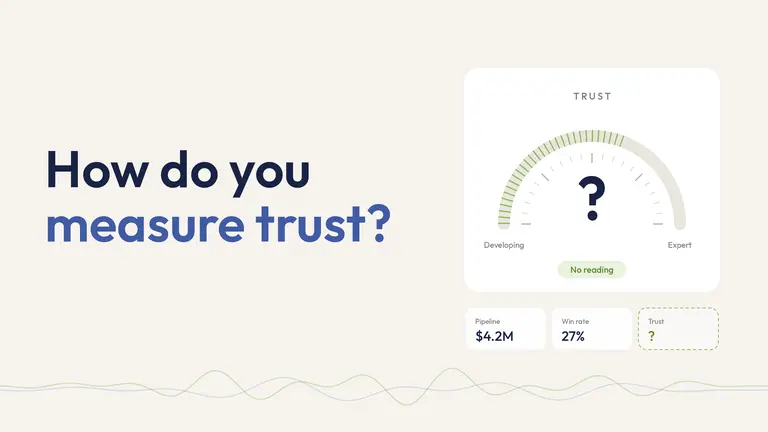
Then we measure the people who filled out the form.
Reflect on who doesn't fill it out. Anybody who has already mentally resigned skips it. So does the person who stopped believing anything would change. The one who got passed over last cycle either skips it or fills it out carefully and tells you nothing.
Your instrument selects out the people you most need to hear from. Every single time. That's not your vendor being sloppy, it's what happens when you ask people to volunteer.
So 71% favorable comes back and the number is accurate. It accurately describes how your most engaged employees feel.
Which is a real thing to know, and not the thing you thought you were buying......
Then there's the wait. Quarterly pulses don't solve it, because by the time anybody acts the picture is already weeks old. Cadence was never the problem. The source was.
And then look at what lands on your desk.
“Communication scored 3.2.”
Go fix that on Monday. I'll wait.
“Your one-to-ones with Ana and Dev haven't happened in three weeks” is something a manager can fix on Monday. A 3.2 is something a manager can feel bad about.
The exit interview is an autopsy
You've lived this one. I have too.
Somebody disengages. They go quiet in team meetings. Their one-to-ones get rescheduled, then they stop getting rescheduled at all. They stop getting named when anybody hands out credit.
Nobody logs a word of it, because none of it is an event. It's the absence of events, and there's no field in your HRIS for that.
Months later they resign. You run a thoughtful exit interview. You take great notes. You learn exactly what went wrong and exactly when it started.
The documentation is excellent.
The patient is dead.
People don't quit suddenly. You find out suddenly. That gap is where the entire cost of this lives, and a once-a-year survey was never built to close it.
So we built the other thing
Your teams are already producing the data. They're in meetings all day.
Relate puts an AI teammate named Sandi into the Zoom, Teams and Google Meet calls your people already run. She reads over 50 behavioral and vocal signals and scores them across 16 engagement areas, for each person, manager, team and department. The score moves after every meeting instead of every fiscal year.
Nothing gets rolled out. No form. No prompt. No reminder email you have to send twice. No response rate to defend to your CEO in a QBR. Connecting the calendar takes an afternoon.
What comes back is different in kind. Not a score with no handle on it, but a list with names on it.
This team's one-to-one rhythm fell from weekly to every three weeks.
These two people stopped speaking up after the reorg.
This manager made four commitments in planning and hasn't mentioned one of them since.
That last category is the one that changes a People team's week, because every line of it is fixable by Thursday.
Every question on your survey, already answered
The objection I get most, and it's a fair one, is that behavior and feelings aren't the same thing. Measuring what people do isn't the same as asking how they feel.
Fair. So we mapped it against the survey itself. Here are six items that show up in some form on nearly every engagement survey sold, and what Relate reads instead of asking.
Your survey asks: “I receive recognition for good work.”
Relate measures: Praise that names a person and a specific piece of work, counted per person, per week.
Your survey asks: “My opinions seem to count.”
Relate measures: Whether ideas get acknowledged in the room, and whether anybody brings them up again later.
Your survey asks: “I can raise problems and tough issues.”
Relate measures: Whether people disagree with the manager in the room, and how fast it gets dealt with.
Your survey asks: “My manager cares about me as a person.”
Relate measures: How often one-to-ones happen at all, and how much of them the manager spends listening.
Your survey asks: “Someone encourages my development.”
Relate measures: Whether career conversations happen in one-to-ones, and whether stretch work gets handed over.
Your survey asks: “I expect to be working here in two years.”
Relate measures: Whether people still talk about plans in the future tense.
Read that last one twice.
Intent to stay shows up in grammar long before it shows up in a resignation letter. Somebody who has checked out stops saying “when we ship this” and starts saying “when you ship this.”
None of this replaces asking people how they feel. Keep asking. Run the survey if the survey is serving you. The point is you don't have to wait until next March to find out recognition in Operations dried up after the August reorg.
Measuring it was only ever half the job
Now the part that made me stop writing about this problem and go build something.
Measuring harder develops nobody.
Plenty of People teams already have a decent gut read on which teams are struggling. What they don't have is any way to do something about it at the size the problem comes in.
So count your managers. Go on, count them.
At 600 people you've probably got around 60 humans managing other humans.
Now count how many are in a development program this year.
Eight. Maybe six.
And those eight are there because somebody senior put their name forward, which is also how the same profile keeps getting promoted, but that's a different article.
The other 52 get a workshop every couple of years and a link to a learning library nobody opens.
That is not a development strategy – this is why attrition happens – regrettable attrition.
Relate coaches all 60. After every meeting a manager runs, they get private feedback on their own behavior and three ranked things to do differently this week. Not a competency framework. Three things, in order, with names attached. Put the one-to-ones with these two people back on the calendar. Close the loop on what you promised Tuesday. Name the work, not only the win.
Every employee gets the same thing for their own meetings, privately, before anybody else sees a trend.
That's the half that doesn't fit on a dashboard, and it's the half that changes anything.
The privacy bar, and it should be high
If you're a CHRO you got to this section already writing the objection in your head. Good, and you should.
Putting an always-on system into your people's meetings is a serious thing to do, and the entire burden sits with the vendor. So here's the bar we hold ourselves to, in plain English, so you can hold us to it and hold everybody else to it too.
The employee sees their own feedback first, before anyone else sees a trend. Scores are never shown for any group under five people, so nobody can work backward to an individual. HR sees team patterns and never individual scores. None of it touches a performance rating or a pay decision. And anybody can stop Sandi joining a meeting.
Put these five to any vendor in this category and make them answer without a sales engineer on the line. What's analyzed. What's stored. What's never kept, and for how long. What's the minimum group size before HR sees anything. Whether the output can ever reach a performance review.
If they can't answer that plainly, they haven't thought hard about your people. They've thought hard about your budget.
What to do with this
Don't take my word for any of it. Please don't.
Run a 90-day pilot on two to four real teams, right next to your existing survey, and put them side by side at the end. You'll have a continuous engagement score by week two, a weekly early-warning digest for your People team, coaching for every person and manager on those teams, and a board-ready readout at day 90 showing what got caught, when, and how that compares with what the survey told you. Fixed fee, credited back against year one if you keep going.
If the readout doesn't beat your last survey, walk away.
And if you're not ready to talk to a human yet, start smaller. The Relationship Health Check takes minutes, costs nothing, has no email wall, and hands you a Blind Spot Index: the distance between how well you think you read your teams and what your answers suggest.
Mine was humbling the first time I took it.
That folder is going to sit on your drive either way. The only question is whether next year's version gets opened by somebody who still works there......