How to Measure Workplace Trust in the Age of AI
AI is changing work faster than most companies can measure its impact. Here’s why leaders need a better way to measure workplace trust, reduce risk, and act.

Somebody measured the hole first
Tom Keenan and I recorded We’ve Got Trust Issues on September 16, which happened to be International Ozone Day. Tom found that out that morning and brought it into the conversation cold. It ended up reframing the whole thing.
He also told a story I haven’t been able to put down.
He was at the barber with his twelve-year-old son. The man in the next chair was talking to his hairdresser, and the conversation moved from the heat, to the floods, to AI, and eventually landed on the idea that in ten years we’re all going to be dead.
Tom watched his kid take that in.
He had to have a conversation in the car afterward that no parent should have to have.
That’s the environment every leader is managing inside right now. It’s not just a policy question or an AI strategy question. It’s a room full of people who heard some version of that conversation at a barbershop, over dinner, on a podcast, or in their social feed.
And they’re bringing it to work with them.
What September 16 is the anniversary of
On September 16, 1987, the Montreal Protocol was signed and the world agreed to phase out chlorofluorocarbons. It is held up, correctly, as one of the greatest examples of international cooperation.
Roughly 99% of controlled ozone-depleting substances have been phased out. The 2025 Antarctic ozone hole was the fifth smallest since satellite monitoring began in 1992. Full recovery is projected for the latter half of this century.
But there’s a part of the story that tends to get left out of the anniversary posts.
Nobody negotiated their way to discovering that hole.
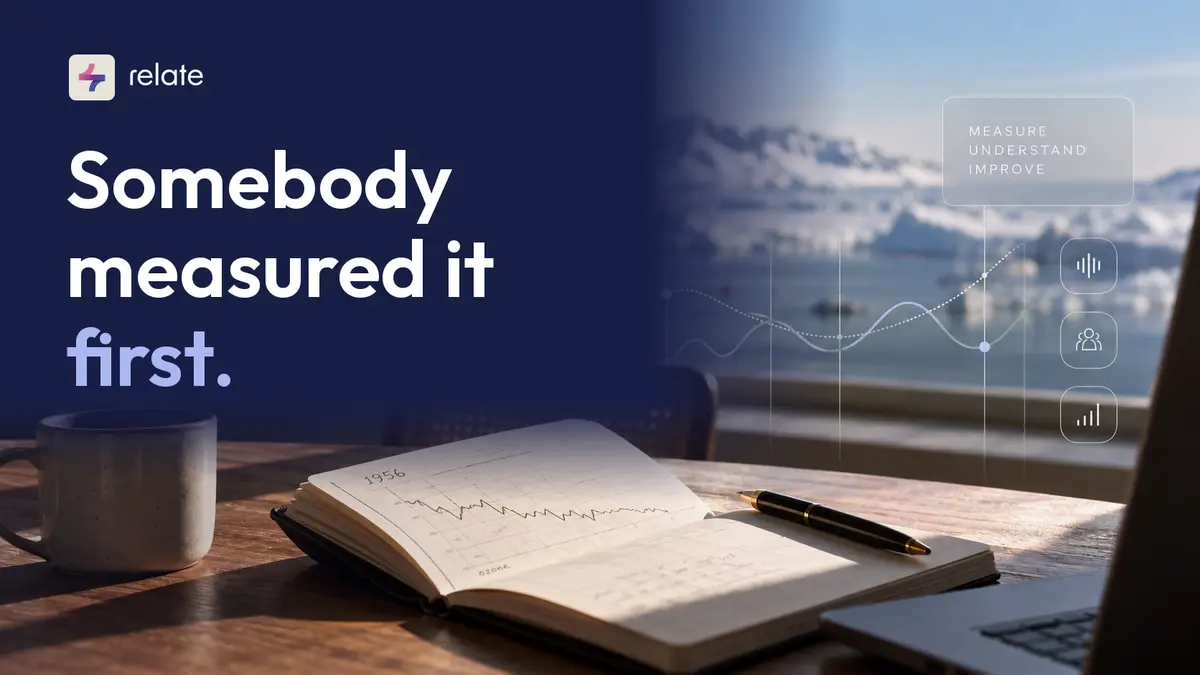
Somebody measured it.
The British Antarctic Survey had been taking ozone readings at Halley Station since 1956. For nearly three decades, somebody kept going out and writing the number down.
Then, in May 1985, Joe Farman, Brian Gardiner and Jon Shanklin published what those readings showed: ozone levels over Halley had fallen dramatically compared with earlier decades.
The Montreal Protocol was signed twenty-eight months later.
Nearly three decades of measurement, then just over two years to a global agreement.
The diplomacy was the fast part. The measurement was the hard part. It happened first, and without it there is no treaty to celebrate.
We have a trust problem. But are we measuring it?
Right now there is no shortage of debate about AI, its pace and its risks.
Industry leaders are warning about what happens if development moves too quickly. Employees are asking for stronger safeguards. Governments are trying to decide when and how to intervene.
I’m less interested in debating their motives than I am in what’s missing from the conversation.
In 1985, there was a number.
There was a measured, published and independently confirmed change that made action possible.
Today, we’re having one of the biggest conversations about workplace trust I’ve seen in my career, yet most leaders couldn’t tell you whether trust inside their own organization went up or down this quarter.
That’s a problem.
Companies measure revenue. Pipeline. Churn. Productivity. Engagement. Utilization. Customer satisfaction.
But trust?
For something that affects whether employees believe their managers, whether customers believe a salesperson and whether teams can navigate change, we still tend to treat trust as something we can sense rather than something we can measure.
Engagement surveys go out in July and get read in October. AI notetakers produce summaries nobody reopens. Revenue intelligence tells you what was said on the call, but rarely how it landed.
You cannot fix what you refuse to measure.
I’ve been saying some version of that to executives for twenty-five years. It has never felt more literal than it does now.
De-risking is the word
When I hear risk, I hear de-risking. That has always been the founder’s version of the word.
De-risking can sound defensive. It isn’t.
It’s how you move quickly without losing sight of your employees, your customers or your fiduciary responsibility.
The leaders who get this right won’t be the ones who moved fastest at any cost. They’ll be the ones who figured out how to move while protecting the people depending on them.
So here’s an exercise that takes an afternoon:
What are three things I can de-risk for my employees, my company and my customers this quarter?
I’ll make you a promise about your answers. Most of them probably won’t have anything to do with AI.
They’ll be wages. Care. Processes. Benefits. Protections.
The things that were already on the list before anybody had a model.
Instead of token maxing, try human maxing
The amount of money flowing into AI infrastructure is staggering. At the same time, companies are under pressure everywhere else: training budgets, benefits costs and the everyday expenses employees feel in their paychecks.
That contrast matters.
Because leaders don’t have to wait for an international agreement, an executive order or a change of heart from the technology industry to make a difference inside their own organizations.
Instead of token maxing: grocery max. Benefit max. Human max.
Those aren’t slogans. They’re line items.
They’re things a leader can actually move this quarter.
There’s risk hiding in your software stack, too
There’s another de-risking opportunity sitting inside the software budget, and most companies walk right past it.
The average mid-market company may be paying three or four different vendors to tell it what already happened.
An engagement platform. A meeting notetaker. A revenue intelligence tool. Maybe a coaching platform on top.
Each one holds employee or customer data. Each has its own contract, data processing agreement, security requirements and renewal. Each creates another system your teams have to manage and another place sensitive conversation data can live.
And after all of that, you may still not have an answer to the question that matters:
Are our relationships getting stronger or weaker?
Consolidating that stack isn’t only a budget exercise. It can also be a risk exercise.
Fewer contracts. Fewer copies of your people’s data. Fewer systems to audit. And ideally, one consistent set of measures that HR, legal, sales and leadership can actually understand.
But the bigger opportunity is not simply spending less.
It’s getting more useful information from the technology you’re already inviting into your conversations.
What Relate measures differently
That is the problem we built Relate to solve.
Relate goes beyond the meeting transcript to analyze both what was said and how it was said.
It looks at vocal behaviors such as hesitation, pace, energy and interruption alongside trust behaviors grounded in the Trust Equation and our methodology partnership with Trusted Advisor Associates.
What comes back isn’t another meeting summary.
It’s a consistent way to understand how communication and trust are changing over time, at the individual and team level, with private coaching that helps people improve after the conversations they’re already having.
In other words, you get a number taken consistently enough and for long enough that you can actually do something with it.
Because measurement is what turns a concern into something you can act on.
Tom said something at the end of the episode that I keep coming back to.
Putting yourself in the trust conversation at all, right now, is a differentiator.
If you can tell your employees and your customers that being trusted matters enough to you that you’re willing to measure it, learn from it and improve it, you’re already doing something most organizations aren’t.
Nobody is coming to hand you a Montreal Protocol for workplace trust.
The people who eventually wrote that agreement didn’t start with a treaty either.
Somebody started by writing the number down.
Pick your three things. Start measuring one of them this week.