The call every HR leader is having this month
A layoff they did not choose, a staff that stopped believing the leaders, and 90 days to fix it with the team they have left. This is going on in every organization right now. It is why Relate exists.

Last week I took a call from an HR leader whose organization had just gone through a layoff. I am not going to say who or where, and I am going to keep the details high level, because the whole point of what we do is that people can talk without it ending up somewhere. But I have had this call, in one form or another, every week this fall, and it is the same call every time.
The call
Months ago, leadership told the staff a story about the future. Then the future turned out to include a reduction. The people who stayed heard the same leaders say the next thing, and they did not believe it. The HR leader on the phone with me did not make the decision and did not make the number. What landed on their desk was the trust, the credibility, and 90 days to rebuild both, with a smaller team, on top of the day job.
They had already done the work. A phased 90-day plan. Manager-led huddles with scripts and FAQs so the people who left and the people who stayed both heard it from somebody they knew. Department leaders asked to own a few early warning indicators each. A pulse survey planned for about a week after the reduction, on top of the quarterly one. Frameworks picked, budget found, calendar cleared. Everything a good People leader does when the decision has been made above them.
And still the question underneath the whole call was the one every HR leader asks after a layoff: how will I know if it is working before it is too late to change it.
Why this is everywhere
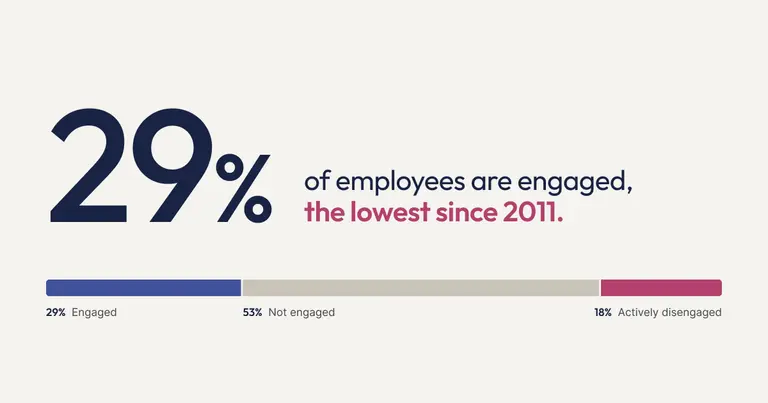
Gallup says 29% of US workers are engaged, the lowest since 2011, and the line that fell furthest is whether somebody at work cares about you as a person. Canva cut 22% of its staff last week. 1 in 5 people laid off for AI this year have been asked back. Every one of those stories lands on an HR leader who did not make the call and has to carry the room afterward.
The tools they have for it were built for a different problem. A pulse survey a week after a reduction comes back a week after that. It tells you on day 14 how people felt on day 7. The people who are going to leave decide between day 1 and day 30, and they decide based on how their own manager handles the next few meetings, not on the all-hands. By the time the survey says trust is down, the exits are already on the calendar.
I have run those surveys. I presented the results. The number was always right and always late.
What I told them
Say the earlier optimism was wrong, by name, before you say anything about the future. People will not hear a plan from a leader who has not admitted the last plan was wrong.
Managers first, then the all-hands. Give people a day with somebody they know before they sit in a room with a slide.
No promises for 30 days. Every promise made in the first month after a layoff is a promise people are waiting to watch you break.
Keep the tools simple and keep the list short. 2 or 3 indicators a department leader picked will get looked at every week. 12 that HR picked will not.
Reinforce. Every change program I have ever seen failed in week 6, when the huddles stopped and nobody noticed.
Where Relate comes in
The plan they had was good. Here is what changes when the meetings in it are being read.
1. Day 2, not day 14
The huddles happen on day 1 and 2. Relate reads them the same day: which managers took questions, which ones read the script and left, which rooms went quiet. The HR leader gets that while there is still time to do something about it, instead of a survey result after the window has closed.
2. The no-promises rule, counted
A commitment made out loud is a thing Relate tracks, with an owner and a date. If a leader promises no further cuts in a huddle on day 3, that shows up on their own report that afternoon, and on the team view as a theme the same week. Without it, HR finds out when the promise breaks.
3. The people who stayed
They are the whole retention problem now. 1 on 1 coverage is the first thing that slips after a layoff, because managers are absorbing the work of the people who left. Relate reads coverage off the calendar from day 1 and flags the team where it drops, with the date.
4. The leaders who overpromised
They will do it again in a smaller way. Self-orientation on a leader’s report is the share of the meeting spent on their agenda against the room’s. A leader who spends the trust huddle talking about strategy hears it that evening, privately, from Sandi, and not from HR.
5. Development inside the meeting
Every manager running a huddle gets a private note afterward. 1 thing to try next time, 60 seconds, inside a meeting already on their calendar, and then whether it worked. That is the leadership development program for the 90 days, and nobody has to schedule it.
6. Privacy, which matters most right after a layoff
Individual data belongs to the individual. Every manager sees their own read and nobody else’s. HR sees themes for groups of 5 or more, no names, no individual scores, and there is no setting that changes it. In an organization that just lost people, the first question from the staff is who sees this. The answer is nobody, and it has to be true or none of the rest works.
I ran it on myself
I had Sandi on that call too. My Trust Index came back Skilled on credibility and reliability, Developing on intimacy, and the talk ratio said I spoke 70% of the time on a call where the other person was the one with the layoff. The coaching was 3 lines: tighten the explanations, be specific about what happens next, and ask how they are doing before asking what tools they use.
I built this thing and it told me to talk less. Good. I am not going to ask you to put it on your managers if I will not put it on myself, and I am not going to pretend the note did not land.
Takeaways
IF YOU ARE THE CEO OR FOUNDER
If you made the optimistic speech, you make the correction, by name, in person, before HR or a slide does.
Zero promises for 30 days is a rule for you before it is a rule for your managers.
The people who stayed decide in the first 14 days whether to stay. Fund those 14 days like a launch.
IF YOU ARE THE CHRO OR HEAD OF PEOPLE
Your survey comes back on day 14. Your managers run the huddles on day 1. Measure the huddles.
Give every department head 2 or 3 indicators they picked, and let the rest go.
Read your own scorecard first. If you will not, do not ask them to.
IF YOU ARE A MANAGER RUNNING A HUDDLE THIS WEEK
Read the script, then stop and ask 1 open question. Count to 3 before you fill the silence.
Do not promise anything you do not control. If somebody asks about more cuts, the answer is I do not know, and here is when I will know more.
Hold every 1 on 1 for the next 30 days. Move them if you have to. Do not cancel them.
What it costs to wait
Replacing 1 senior person runs 1.5 to 2 times salary once you count the vacancy, the search and the ramp, and that is before the program that stalls while the seat is empty. 2 regretted exits in the first month after a layoff cost about what it costs to read every meeting in the building for a year.
If you are in this room
Relate is free to start. Connect the calendar and Sandi is in your next huddle. If you are weeks out from a reduction and want to talk through the 90 days, book a demo and I will take the call myself. The 90-day pilot is $15,000 for up to 300 employees, credited against year one, and it ends with a readout of what Relate caught and when your survey would have caught it.
Measure the huddle, not the survey after it.
A note on this piece
The HR leader on this call is not named and the details are deliberately general. My own scores are mine and shared with my permission. Relate does not publish, export or share any individual’s data, and that includes the other person on every call I am on.